
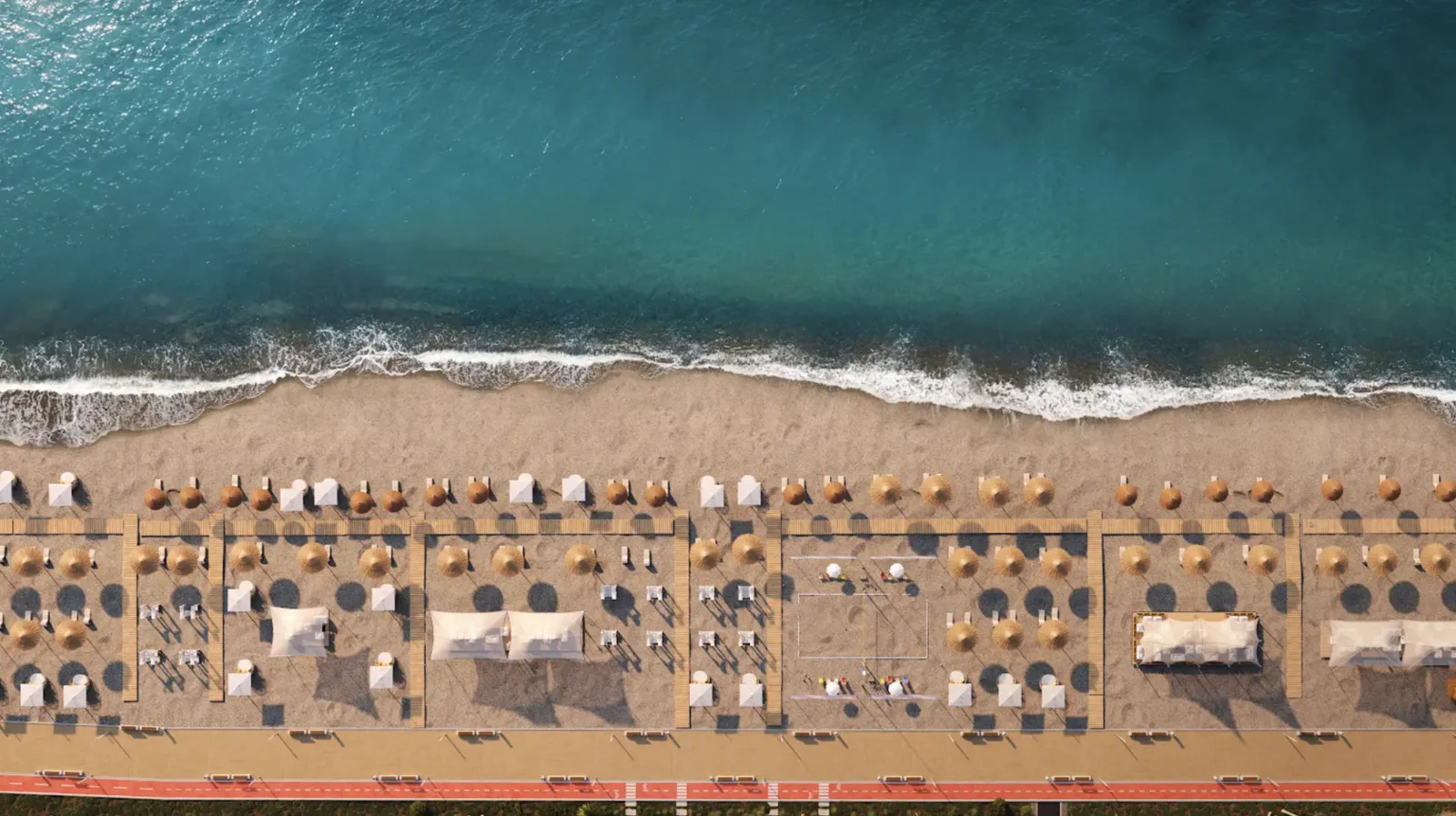
Some beaches are remembered for the sea, others for their scenery or distinctive atmosphere. In Ureki’s case, however, the beach itself is the main attraction — its dark, soft, naturally warm magnetic sand.
Among Georgia’s predominantly pebble beaches, Ureki is a rare exception. Its unique mineral-rich sand and natural magnetic properties have defined the resort’s reputation as a wellness destination for decades.
Among Georgia’s predominantly pebble beaches, Ureki is a rare exception. Its unique mineral-rich sand and natural magnetic properties have defined the resort’s reputation as a wellness destination for decades.
How Was Ureki’s Magnetic Sand Formed?
The story of Ureki’s sand does not begin on the coastline — it begins in the mountains of Guria.
The Supsa and Natanebi rivers originate in the Lesser Caucasus, within the Meskheti Range. The Supsa begins near Mount Mepistskaro at an elevation of approximately 2,800 meters above sea level, while the Natanebi starts on the northern slopes of the Meskheti Range.
As they flow from the mountains toward the Black Sea, the rivers carry mineral sediments of various geological origins. Over thousands of years of geological and coastal processes, these heavier minerals gradually accumulated along the Ureki–Shekvetili coastline.
Geophysical studies indicate that the highest concentration of the magnetic field is found along the stretch of coastline between the mouths of the Supsa and Natanebi rivers.
Research also highlights the importance of the ancient Supsa riverbed and the Natanebi basin in the formation of magnetite-rich sediments.
It can therefore be said that Ureki’s sand is a product shaped by nature over centuries — the combined work of mountains, rivers, and the sea.
The Supsa and Natanebi rivers originate in the Lesser Caucasus, within the Meskheti Range. The Supsa begins near Mount Mepistskaro at an elevation of approximately 2,800 meters above sea level, while the Natanebi starts on the northern slopes of the Meskheti Range.
As they flow from the mountains toward the Black Sea, the rivers carry mineral sediments of various geological origins. Over thousands of years of geological and coastal processes, these heavier minerals gradually accumulated along the Ureki–Shekvetili coastline.
Geophysical studies indicate that the highest concentration of the magnetic field is found along the stretch of coastline between the mouths of the Supsa and Natanebi rivers.
Research also highlights the importance of the ancient Supsa riverbed and the Natanebi basin in the formation of magnetite-rich sediments.
It can therefore be said that Ureki’s sand is a product shaped by nature over centuries — the combined work of mountains, rivers, and the sea.
What Does Ureki’s Sand Contain?
Ureki’s magnetic sand consists of approximately:
- Magnetite — 5%
- Titanomagnetite — 4.5%
- Ilmenite — 4.5%
- Monazite — 4.9%
- Zircon — 4.2%
- Granite — 4.3%
- Other naturally occurring minerals
- Magnetite — 5%
- Titanomagnetite — 4.5%
- Ilmenite — 4.5%
- Monazite — 4.9%
- Zircon — 4.2%
- Granite — 4.3%
- Other naturally occurring minerals
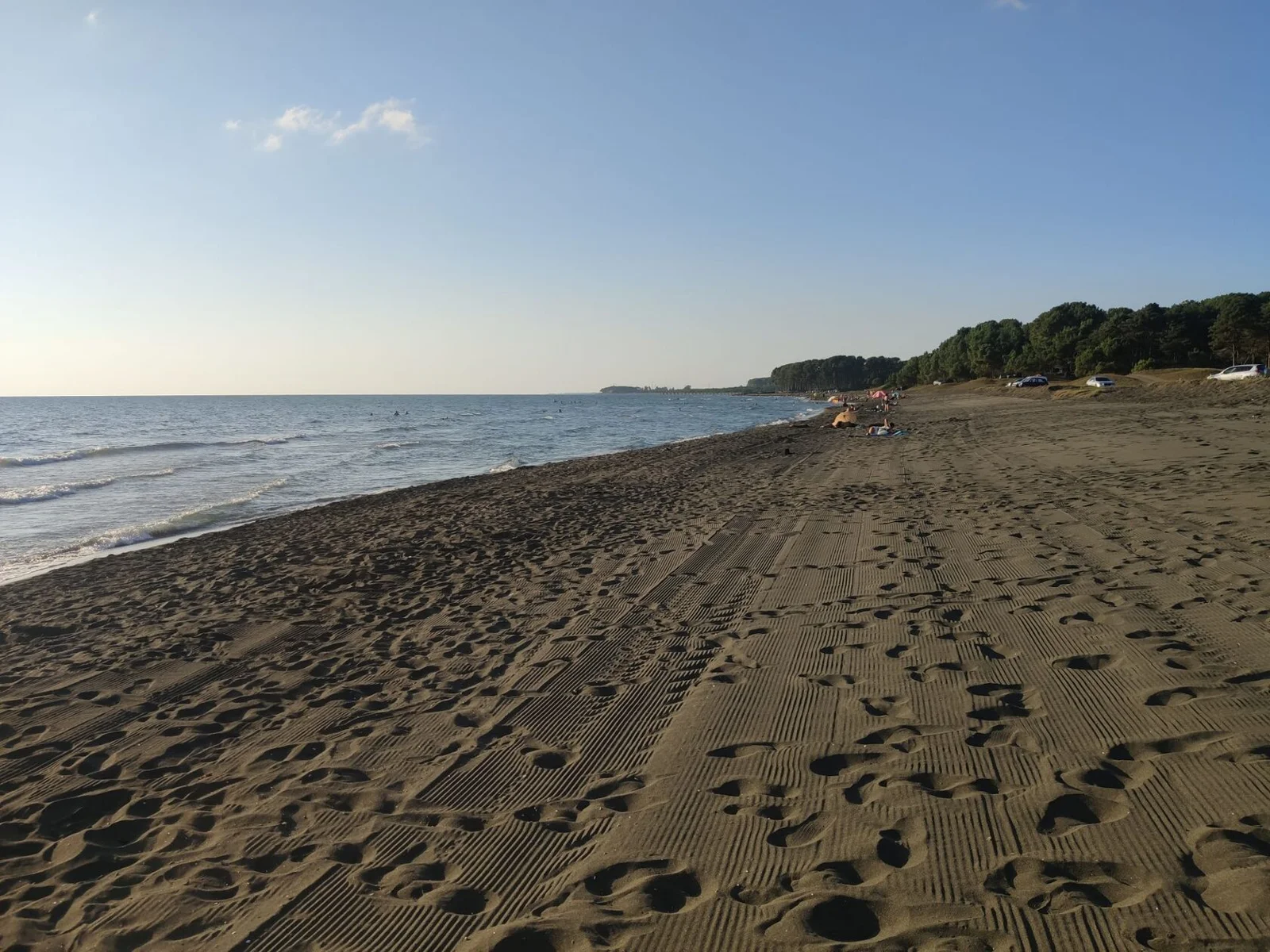
It is these iron-bearing minerals — particularly magnetite — that give the sand its distinctive dark color and natural magnetic properties.
One of the defining characteristics of Ureki’s magnetic sand is its ability to absorb heat from the sun and retain it for an extended period. The warmed sand transfers heat evenly to the body, while its fine particles create gentle pressure and a natural massage-like sensation on the skin.
The therapeutic use of heated sand is known as psammotherapy. During the treatment, a person lies on warm sand or has specific parts of the body covered with it.
Scientific evidence supporting the effectiveness of psammotherapy remains limited. However, some studies suggest that warm sand baths may help relieve symptoms and improve functional well-being in people with certain rheumatic, chronic respiratory, and neurological conditions. It should not be considered a substitute for conventional medical treatment, but rather a complementary wellness therapy.
An interesting example of the therapeutic use of naturally heated sand can be found in the Japanese city of Ibusuki.
One of the defining characteristics of Ureki’s magnetic sand is its ability to absorb heat from the sun and retain it for an extended period. The warmed sand transfers heat evenly to the body, while its fine particles create gentle pressure and a natural massage-like sensation on the skin.
The therapeutic use of heated sand is known as psammotherapy. During the treatment, a person lies on warm sand or has specific parts of the body covered with it.
Scientific evidence supporting the effectiveness of psammotherapy remains limited. However, some studies suggest that warm sand baths may help relieve symptoms and improve functional well-being in people with certain rheumatic, chronic respiratory, and neurological conditions. It should not be considered a substitute for conventional medical treatment, but rather a complementary wellness therapy.
An interesting example of the therapeutic use of naturally heated sand can be found in the Japanese city of Ibusuki.

On the coast of Ibusuki, located in Kagoshima Prefecture, underground geothermal waters naturally heat the beach sand. During the traditional treatment, visitors wear a yukata, lie on the beach, and attendants cover their bodies with warm sand up to the neck. This centuries-old practice, known as Sunamushi, has been part of Ibusuki’s culture for more than 300 years.
The sand of Ibusuki and Ureki is not identical. The Japanese tradition is based on geothermally heated sand, while Ureki’s uniqueness lies in its natural magnetic properties and mineral composition.
However, the example of Ibusuki demonstrates an important principle: when a unique natural resource is supported by quality infrastructure, a strong hospitality culture, and effective destination branding, it can become a wellness attraction of international significance.
The sand of Ibusuki and Ureki is not identical. The Japanese tradition is based on geothermally heated sand, while Ureki’s uniqueness lies in its natural magnetic properties and mineral composition.
However, the example of Ibusuki demonstrates an important principle: when a unique natural resource is supported by quality infrastructure, a strong hospitality culture, and effective destination branding, it can become a wellness attraction of international significance.
Does Ureki’s Magnetic Sand Have an Equivalent?
Magnetic black sand rich in heavy minerals can also be found on beaches in other parts of the world. However, its geological origin and mineral composition vary significantly from one location to another, making it difficult to identify a true equivalent to Ureki.
One of the closest and most widely recognized comparisons is the west coast of New Zealand’s North Island, where black sand beaches stretch for hundreds of kilometers. There, titanomagnetite is the dominant mineral, giving the sand both its distinctive dark color and pronounced magnetic properties.
Similar heavy-mineral beach sands are also found in India, Sri Lanka, Vietnam, Indonesia, and certain regions of the United States. Their composition includes varying proportions of ilmenite, magnetite, monazite, zircon, rutile, garnet, and other minerals.
For this reason, none of these beaches can be considered an exact equivalent of Ureki.
What makes Ureki truly distinctive is not only the presence of magnetic minerals but also their natural concentration, the beach’s soft texture, warm sand, Black Sea climate, and proximity to pine forests. Together, these elements create an environment that sets Ureki apart from other black sand beaches around the world.
One of the closest and most widely recognized comparisons is the west coast of New Zealand’s North Island, where black sand beaches stretch for hundreds of kilometers. There, titanomagnetite is the dominant mineral, giving the sand both its distinctive dark color and pronounced magnetic properties.
Similar heavy-mineral beach sands are also found in India, Sri Lanka, Vietnam, Indonesia, and certain regions of the United States. Their composition includes varying proportions of ilmenite, magnetite, monazite, zircon, rutile, garnet, and other minerals.
For this reason, none of these beaches can be considered an exact equivalent of Ureki.
What makes Ureki truly distinctive is not only the presence of magnetic minerals but also their natural concentration, the beach’s soft texture, warm sand, Black Sea climate, and proximity to pine forests. Together, these elements create an environment that sets Ureki apart from other black sand beaches around the world.
A Natural Resource Worth Protecting and Developing
Ureki’s magnetic sand is far more than a tourist attraction. It is the foundation of the resort’s history, identity, economic potential, and international recognition.
Realizing its full potential requires protecting the coastal ecosystem while developing infrastructure that respects and preserves the natural environment.
Ureki’s future should not be defined solely by the number of new buildings or tourist facilities. Sustainable development must preserve the very natural resource that makes the destination unique.
In Ureki, the sea, warm magnetic sand, pine forests, and a peaceful coastal setting come together naturally. This unique combination creates an experience that is becoming increasingly valuable in a world where people are placing greater emphasis on wellness, relaxation, and a closer connection with nature.
Ureki’s greatest asset is not man-made—it was created by nature. The challenge now is to preserve, understand, and develop this remarkable resource responsibly for future generations.
Realizing its full potential requires protecting the coastal ecosystem while developing infrastructure that respects and preserves the natural environment.
Ureki’s future should not be defined solely by the number of new buildings or tourist facilities. Sustainable development must preserve the very natural resource that makes the destination unique.
In Ureki, the sea, warm magnetic sand, pine forests, and a peaceful coastal setting come together naturally. This unique combination creates an experience that is becoming increasingly valuable in a world where people are placing greater emphasis on wellness, relaxation, and a closer connection with nature.
Ureki’s greatest asset is not man-made—it was created by nature. The challenge now is to preserve, understand, and develop this remarkable resource responsibly for future generations.
Ureki Sands Lifestyle Resort — A New Chapter in Wellness Living
This vision is reflected in Ureki Sands Lifestyle Resort—a large-scale wellness-focused development that brings together Ureki’s exceptional natural environment, contemporary infrastructure, and a resort experience designed to meet international standards.
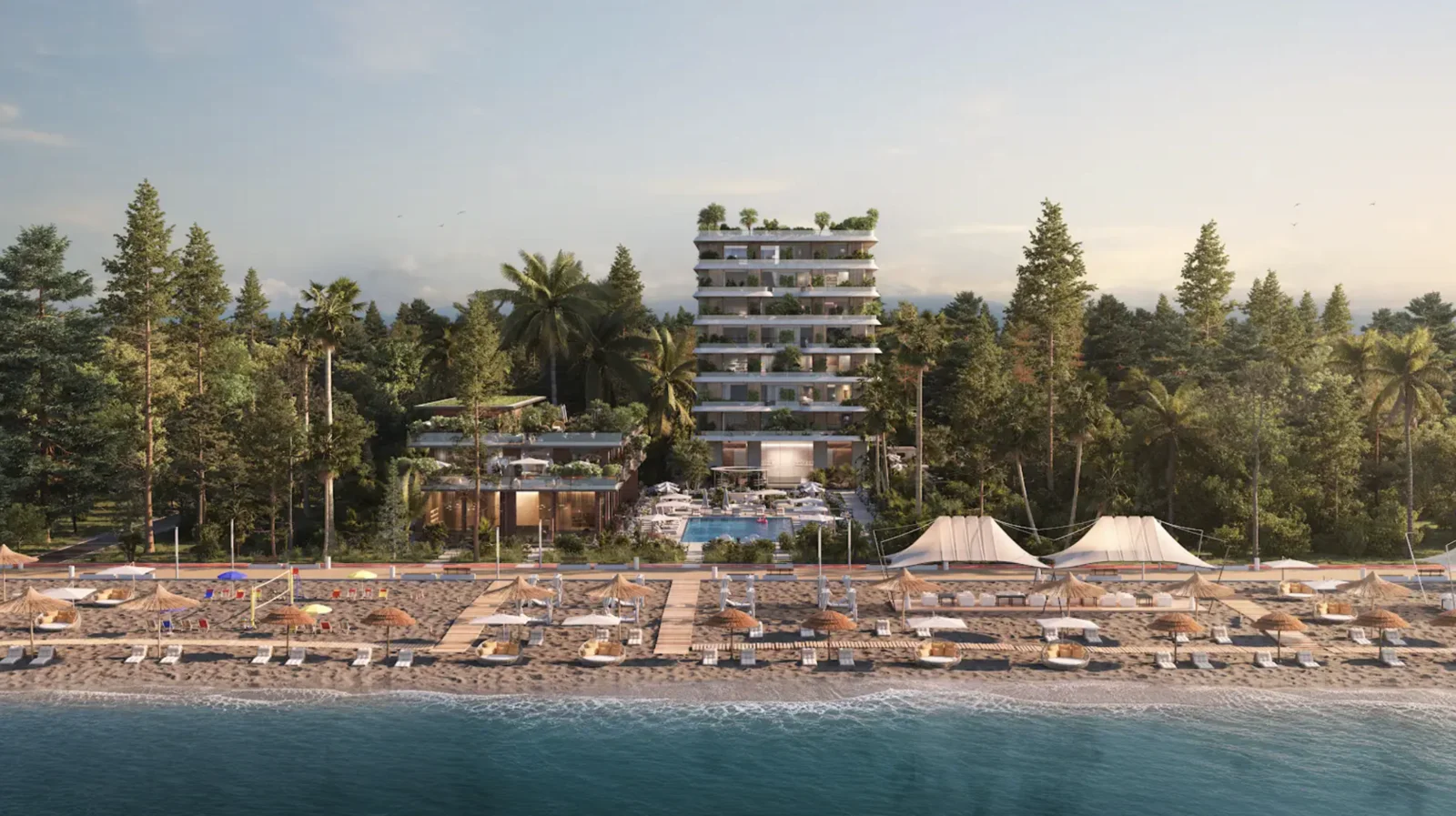
The project’s concept is founded on the thoughtful integration of Ureki’s natural advantages, reinforcing its position as a distinctive wellness destination while creating long-term investment value.
Learn more: https://centralmg.ge/ureki-sands-resort