Blog

Real Estate Investment 2026 – An Overview of the Georgian Market

Georgia's real estate market has changed considerably in recent years, and this dynamic moves in only one direction: prices are rising, the quality of projects is rising, the share of international investors is rising. Real estate investment today is entirely different from what it was five years ago — the market has matured, demand has become more diverse, and those who managed to place their assets at an early stage already see real returns. In this blog we will discuss where the sector stands in 2026, what underpins this stability, and what a buyer should know before making a final decision.

Why is real estate investment in Georgia stable?

International financial platforms often include Georgia on the list of countries where doing business is maximally simplified. The liberal tax environment and minimal bureaucracy here allow an investor to manage their own finances without unnecessary administrative barriers. Today, against the backdrop of growing inflationary processes, investing in premium-class properties creates a source of stable, long-term passive income. The current market dynamic shows that demand for quality architecture and developed infrastructure is only increasing, which reinforces the expectation that the pace of capitalization will be maintained in the future as well.
Such market stability is conditioned by the simultaneous action of several fundamental factors, the first and most visible of which is the dynamic of tourism. The flow of visitors to major seaside and mountain resorts grows steadily from year to year, which is directly reflected in the short-term rental sector. This means that investment real estate in Tbilisi or Batumi works on real, measurable international demand. As a result, placing assets in the local market carries far less risk.
The third, often less noticeable component in this chain is the pace of infrastructure development. Cooperation between the state and the private sector, new transport hubs, the expansion of airports, and the arrival of global hotel brands sharply increase the investment potential of those locations where property today is still presented at an accessible price.

The market's leading directions and pace of growth

Georgia's real estate market is divided into several entirely different parts. The premium segment of Batumi's coastline and historic center grows at the fastest pace. This is the property that is attractive to foreign investors — everything is ready for living or renting, the infrastructure is in order, and both prices and rental demand are steadily high.
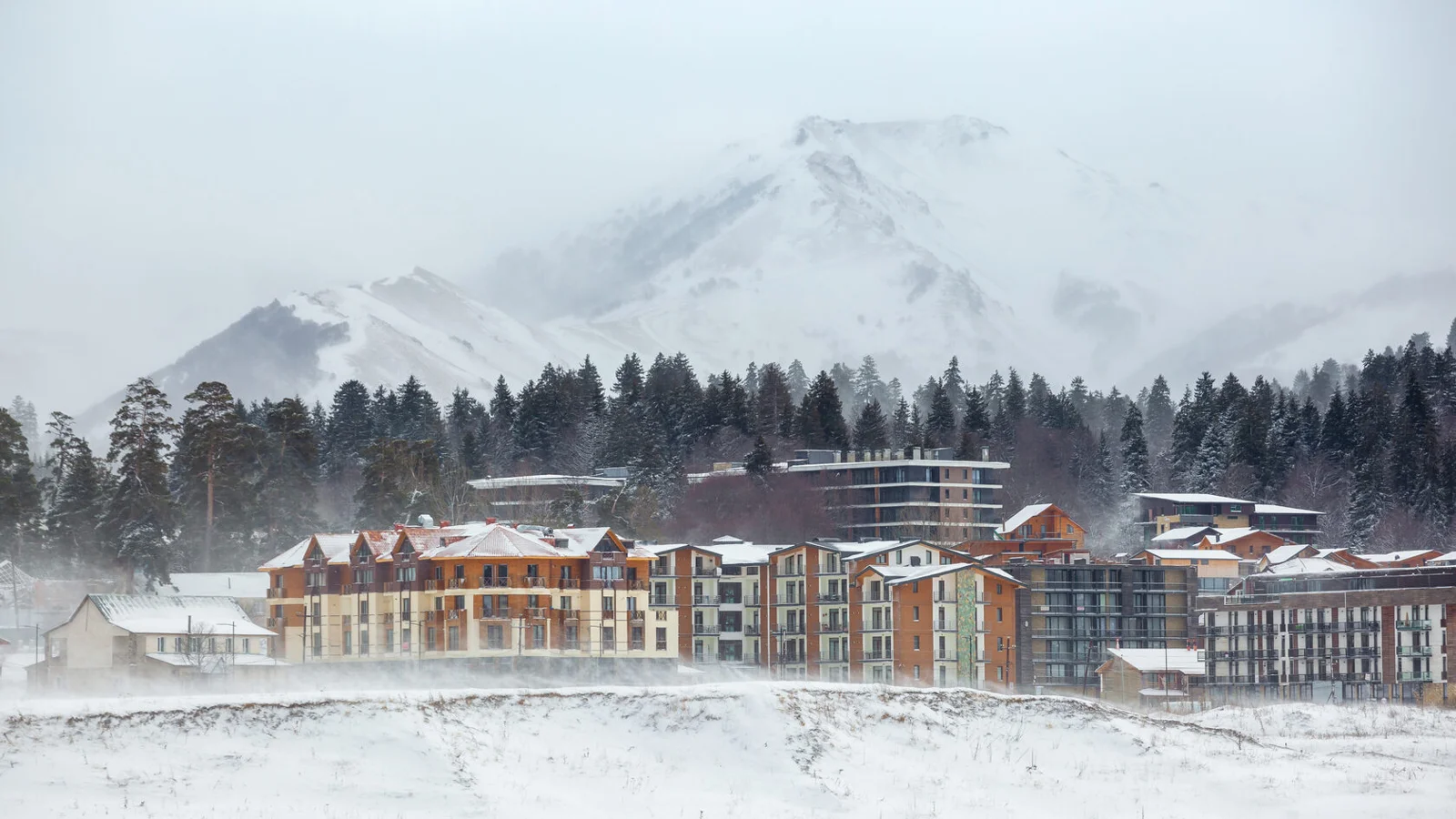
The second direction is the hotel-type complexes of Bakuriani and Gudauri. Here the main emphasis is placed on internal services, pools, restaurants, and spa spaces. It is precisely such diverse services that help owners avoid seasonal downturns and rent out the apartment at any time of year.
Against this backdrop, the residential real estate sector of Tbilisi and Batumi is characterized by a much more stable trend. This direction is mainly oriented toward long-term lease and local demand.
Hence, the choice depends on what the goal of the investment is: fast and high profit, or stable, long-term income.

Short-term or long-term lease: which model is optimal?

This question arises for any buyer, and the answer depends on two main factors — location and the set goal.
Short-term rental (Airbnb and similar platforms) stands out with maximum financial return in resort zones, specifically in Batumi. A property located in a good location can, during the season, bring in within one week a benefit that even exceeds the monthly payment of a standard lease.
Long-term rental is based on entirely different logic. In Tbilisi, where students, local professionals, and arriving foreigners are constantly looking for apartments, long-term lease is a stable monthly income. In this case, both the risks and the owner's concerns are reduced to a minimum.
For many investors, the most advantageous is the hybrid model: when the apartment is rented daily during the season, and for the rest of the time — for several months. Part of CMG's projects are created specifically with this idea. In these complexes the infrastructure is adapted to both scenarios, and an experienced management team is on site, which means the owner spends no time at all on organizational matters.

Hidden factors that change an investment plan

Investing in the real estate market is always accompanied by risks, and Georgia is no exception, though with the right approach, insuring against them is easily possible.

1. Choosing the wrong project

Often, behind attractive renders hides an unreliable developer, a weak location, or artificially inflated rental forecasts. This is especially problematic for those who study the market remotely and are not familiar with local nuances. The solution is simple: you should cooperate only with companies that have experience of real, already completed and successful projects on the market.

2. Seasonal downturns

A property oriented only toward a few months of summer or winter remains non-functional for the rest of the year. To avoid this risk, the emphasis should be placed on complexes that have their own, diverse internal services (spa, pools, restaurants). For example, in Batumi, thanks to active business tourism and conferences beyond the sea season, a properly chosen project finds vacationers throughout the entire year.

3. Low liquidity

Investors often do not think about how quickly they will be able to sell the property if they need to urgently free up capital. In general, liquidity is always determined by two factors: a central location and a brand name. In premium districts demand is constantly high. CMG's portfolio, which is created through the strategic development of partners' best projects, relies precisely on this principle — it includes only those properties that can be sold at any time, within a short period.

Investing in real estate: how to choose a project and a partner?

When selecting investment real estate, the first stage is the analysis of the property's multifunctionality and its long-term master plan. It is important to evaluate the building's internal system, from the presence of common workspaces to the integration of energy efficiency and smart technologies. In the 2026 market, preference is given to projects that are designed from the outset around the so-called “city within a city” concept, where a resident can receive a full range of daily services without leaving the complex.
The second and most critical step is finding a reliable partner who manages the full cycle from the project's idea to sales. At this point it is decisive to cooperate with a team that works exclusively with leading architects, has experience of collaboration with international brands, and promotes only strictly selected properties on the market.
Ultimately, the formula for a successful investment in the Georgian market is simple: the right project, in the right location, with the support of a reliable partner. The buyer should study in detail the company's management policy — how expenses are distributed, through what channels the property is rented, and how protected the owner's rights are in unforeseen situations. CMG's team is your main support on this path — from the initial consultation to the final selection of the project, we help you make a decision based on precise data and not on assumptions.

Frequently Asked Questions – FAQ

Why is real estate investment in Georgia worthwhile in 2026?

Affordable prices, growing tourist flows, and minimal bureaucracy create a rare combination here. These conditions guarantee that real estate investment will be calculated on concrete, measurable results and not on vague assumptions.

Where do I start with real estate investment in Georgia?

The first step is the initial consultation. CMG's team will help you clearly formulate your budget and goals, after which it will select for you only projects backed by data and real figures.

How much initial capital is needed to start an investment?

To begin, it is not mandatory to pay the full price of the property all at once. Most developers offer buyers flexible in-house installments, where the initial payment is often only 10% to 20%, which means you can acquire high-class investment real estate even with minimal starting capital.
2026-06-08 07:56